Blog ·
Estadio Azteca: the Hand of God, the goal of the century and two finals
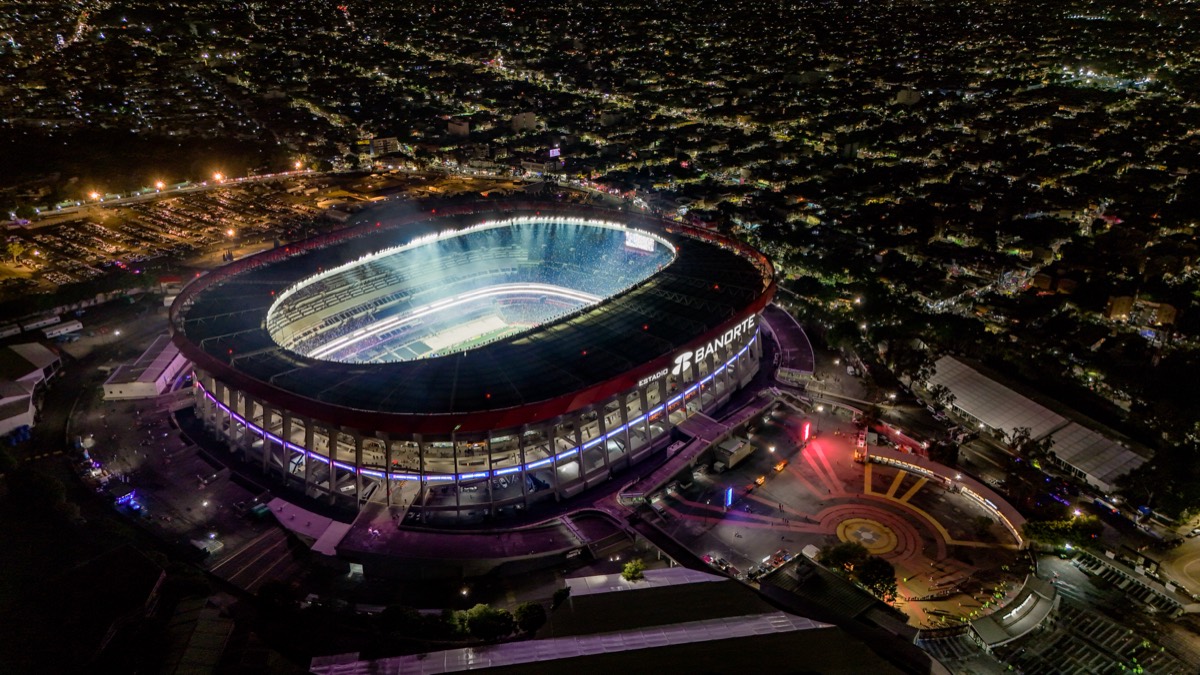
The Estadio Azteca (Aztec Stadium) is the only stadium to have hosted matches at three World Cups. It saw Pelé's Brazil and Maradona's Argentina crowned. There Diego scored the Hand of God and the goal of the century on the same afternoon. And in 2026 it opened the World Cup.
A Brazilian goal to christen it
The stadium opened on 29 May 1966 with a 2 to 2 friendly between Club América and Torino of Italy. The first goal in the Azteca's history was scored by a Brazilian: Arlindo dos Santos, an América forward. Its neighbourhood and size earned it the nickname Coloso de Santa Úrsula (Colossus of Santa Úrsula), as we told in the most curious stadium nicknames.
1970: the Game of the Century
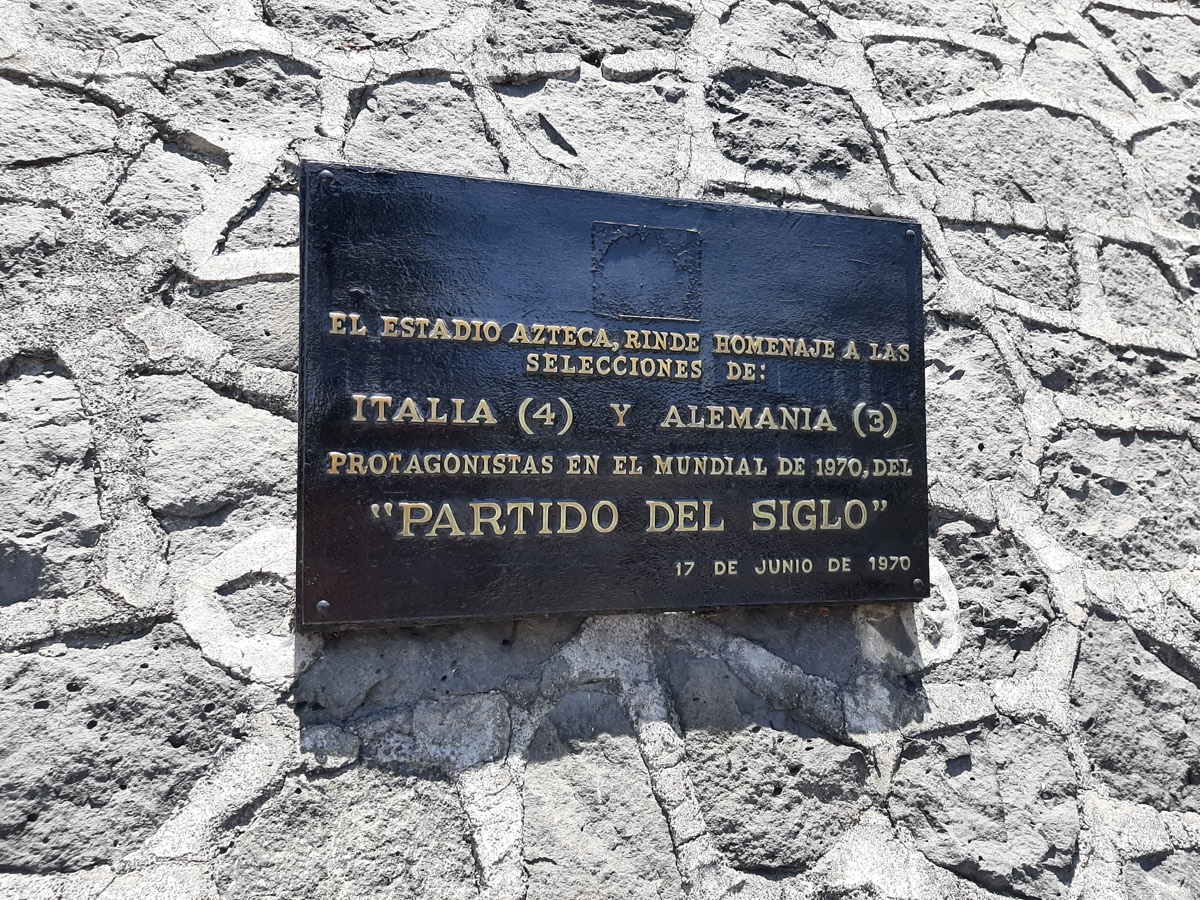
On 17 June 1970 Italy and West Germany met in the World Cup semi-final. It was 1 to 1 after 90 minutes. Extra time brought five more goals and Italy won 4 to 3. It became the Game of the Century. A plaque on the stadium wall recalls it.
Four days later, on 21 June, Brazil beat Italy 4 to 1 in the final. Pelé's Brazil took their third World Cup.
22 June 1986: the hand and the goal
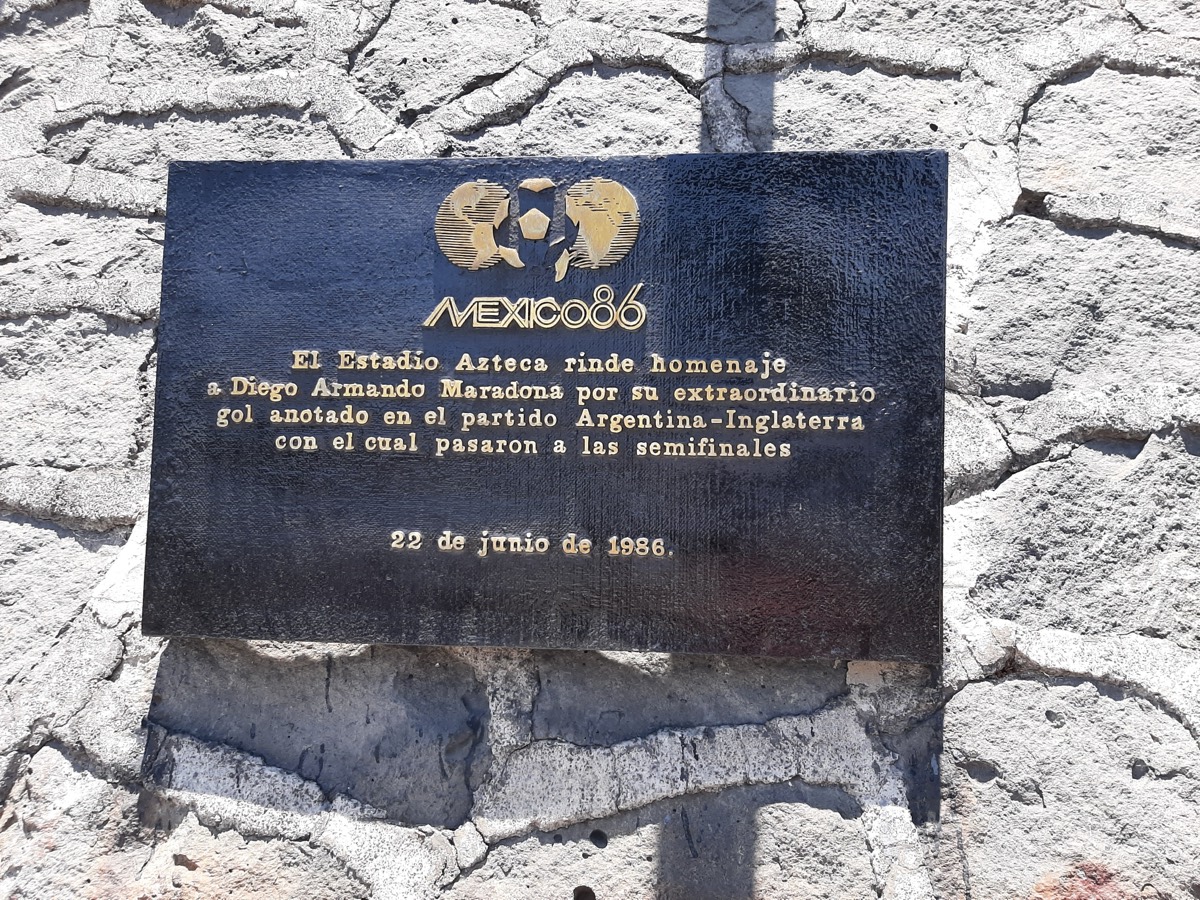
Argentina and England met in the quarter-finals of the 1986 World Cup. Maradona opened the scoring with his hand and later spoke of "the hand of God". For the second goal he set off from his own half and left half the England team behind. It is the goal of the century. Argentina won 2 to 1.
The stadium gave him a plaque for his "extraordinary goal" against England. The plaque does not say which of the two. We assume it is not the one with the hand.
The second final
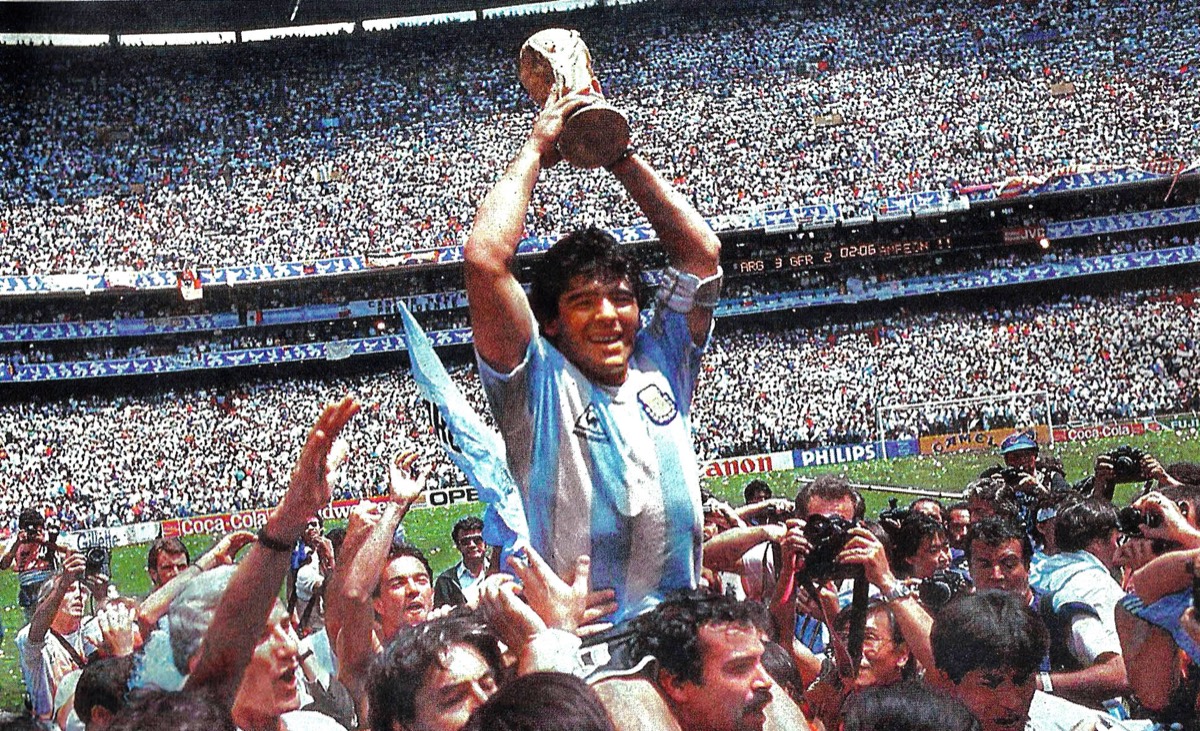
On 29 June 1986 Argentina beat West Germany 3 to 2 in the final. José Luis Brown and Jorge Valdano scored. West Germany drew level and Jorge Burruchaga made it 3 to 2 after a pass from Maradona. It was Argentina's second world title.
2026: the first stadium with three World Cups
The Azteca closed in 2024 for a renovation. In 2025 the bank Banorte bought the naming rights and the stadium became the Estadio Banorte (Banorte Stadium). During the World Cup it was called Estadio Ciudad de México (Mexico City Stadium) under FIFA rules on sponsors. It reopened on 28 March 2026 with a 0 to 0 draw between Mexico and Portugal.
On 11 June Mexico beat South Africa 2 to 0 in the opening match. Julián Quiñones and Raúl Jiménez scored. It was Mexico's first win in an opening match. Colombia also played at the Azteca and beat Uzbekistan 3 to 1. In the round of 32 Mexico knocked out Ecuador 2 to 0. On 5 July, in the round of 16, England beat Mexico 3 to 2. Forty years after the Hand of God, the English left the Azteca smiling.
Could you find the Azteca on a map with no names? Try it for free on GeoFútbol (in Spanish or Portuguese).
How to visit and how to get there
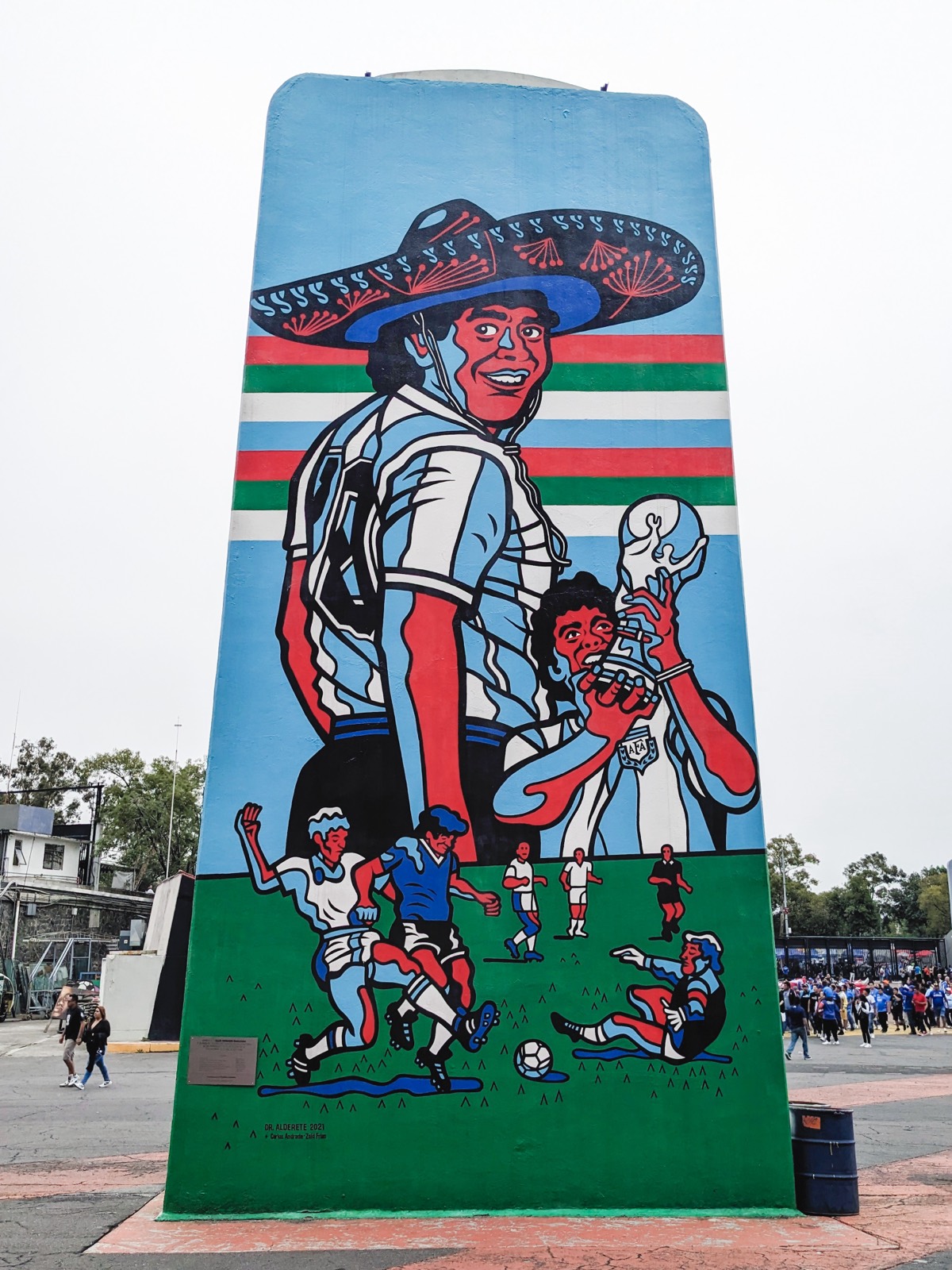
Opposite Maradona's plaque is a mural from 2021. The Argentine artist Jorge Alderete painted Diego in a Mexican sombrero with the trophy in his hand. The stadium runs guided tours of the pitch, the dressing rooms, the tunnel and the plaques. Check the official website for times, prices and whether they are running after the works.
To get there, take Metro Line 2 to Tasqueña. Change there to the Tren Ligero (light rail) towards Xochimilco and get off at Estadio Azteca station, opposite the ground.
More things to do in Mexico City
- Lucha libre. Mexico's other national sport, masks included.
- Balloon over Teotihuacán. A sunrise flight over the pyramids, with a visit to the Basilica of Guadalupe.
If you buy through these links, GeoFútbol may earn a commission.
Could you place the Azteca without looking? Play GeoFútbol today, it's free (in Spanish or Portuguese).